

There’s now a running online fight over Indian-American dominance of the Scripps National Spelling Bee, and over whether the “striver” immigrant model is compatible with American culture. On May 28, Shrey Parikh, a 14-year-old from Rancho Cucamonga, California, won the 2026 Bee in a spell-off against runner-up Ishaan Gupta, who is also Indian-American. Parikh is the 31st champion of Indian heritage in a run that began with Nupur Lala in 1999. Apart from 2021, no one outside the community has won since 2008. That’s nearly two decades of dominance by a group that makes up roughly 1% of the population. But instead of a celebration of excellence and meritocracy, the win was followed by a wave of online abuse, including racist slurs and demands that the boy be deported.

The more respectable criticism goes after “striver” culture itself. Indian-American families run their own parallel spelling circuit, anchored by the North South Foundation and the South Asian Spelling Bee. Former speller Vauhini Vara, writing in Harper’s, found that kids on that circuit start drilling at five or six. Parikh himself works with three coaches, pays for word lists, and competes in online bees 12 months out of the year. This has prompted the public intellectual known on X simply as Wanye to weigh in, conceding that Indian-American kids win through work, but that this kind of winning is itself un-American, because Americans prize natural talent and distrust grinders:
“You don’t study for the spelling bee” is a deep and important aspect of American culture. I was at a baseball game discussing some young players with a buddy one time and he said to me offhandedly, “hard work is fine, but nothing beats talent.”
Americans have this sort of sense that there’s something a little off about working really hard to get good at something that you’re not naturally good at. You’re never really going to be on the same level as the guy who has a natural talent. We have room in our hearts for scrappy little guys who work hard, but we are by default suspicious of grinders and strivers.
If you were really meant to do it, then you’d be naturally good at it. You sign your kids up for little league, but you don’t take it too seriously unless they show remarkable early talent.
Yes, this sounds sort of ridiculous if you take it too literally. No, nobody is saying that there’s any kind of practical test for this or that anybody should be excluded because we found out that they secretly studied too hard.
But this is a part of American culture. And if you can’t understand it, then that just marks you out as foreign to that culture to an even greater degree.I think this is why “imposter syndrome“ is a western phenomenon, to a significant degree. We all kind of know when we’re a natural at something and when we’re there because we got lucky or as the result of grinding. We all know what it looks like when something comes natural to somebody else. And we feel suspicious of even ourselves when we consider the evidence that our own accomplishments required hard work.
This is the culture that produced the sword in the stone. It doesn’t matter how much you’ve practiced, how much you’ve trained, how hard you’ve worked. You’re either meant to pull the sword or you aren’t. Neo isn’t “the one” because he studied to be.
“You don’t study for the spelling bee” is true of some, but wrong in the way he frames it. If you’ve ever seen or read about the subject — Spellbound is a good documentary, American Bee is a good book — you know these kids crack their heads against books with a focus and ferocity that few adults ever manage in their entire lives, which is what makes them so captivating to watch. The book Word Freak talks about a level of obsessive work that almost suggests a mental disorder, so if what you want is a display of natural talent, that’s it. And sure, there are wordcels who possess a natural talent for such things in the way that he means, like myself. I speak multiple languages and seem to pick them up easily. I rolled out of bed without studying at all and scored in the 99th percentile on my GRE verbal. But at the highest level of competition, in that the top 1%, you simply have to prep. I didn’t, frankly, because I just didn’t feel like studying and was confident I’d do well enough.

I’m not a 1% chess player, but I’ve had a certain debate with one of my best friends for years now because I used to play chess mostly blind, meaning without a granular, encyclopedic knowledge of theory. I liked solving problems in real time, thinking through risks, and not moving on muscle memory. My friend is literally autistic and has mastered the second approach. He used to take more games off me, but after years of play, I memorized what I must. Being the son of a Russian master, I always had good opening theory and a formidable endgame, but I have had to learn more since, and truthfully, I miss the old way.
So did Bobby Fischer. Late in life, he complained that chess had become nothing but memorization and prearrangement, and he invented Fischer Random, which shuffles the back rank, to kill off opening prep. It may be apocryphal, but they say someone once asked how many moves he thinks ahead and he replied, “Only one, but the best one.” Magnus Carlsen has taken up the same cause with his Freestyle Chess tour, and his own play pushes opponents into strange positions, creating multiple problems for them without appearing to have a clear conclusion in mind. When I was the head of the national desk at the New York Times sister paper in South Korea, one of the most popular stories we ever ran was about how Lee Sedol played a Go tournament against Google’s AlphaGo, and beat the computer in Game 4. With his now-famous Move 78, he got weird enough to drag them both into uncharted territory, then he out-thought the machine. The chess I miss is the kind where natural talent wins, but playing chess purely as a thinking man’s game means that when you’re evenly matched in intelligence, but your opponent is playing a memory game, you’re going to lose.
The most captivating part of the stories about these kids is almost never the win, but the grind.
Even though you see some masters play a version of the thinker’s game, no one would say Carlsen or Lee are weak on theory or that they are just out there winging it. Raw talent is impressive to see and can be competitive at the highest level, but winning talent requires a combination of giftedness and almost maniacal devotion. Not to mention, the most captivating part of the stories about these kids is almost never the win, but the grind. At least for me, but many others I suspect, it’s knowing how Jordan trained growing up, the hours he put in, the devotion and obsessive perfectionism, that makes him not just a winner, not just a legend, but the GOAT. Same goes for other sports GOATs on my list: Fedor Emelianenko, Alexander Nemov, Lu Xiaojun, Mikhail Baryshnikov. All naturally gifted. All insanely hard working.
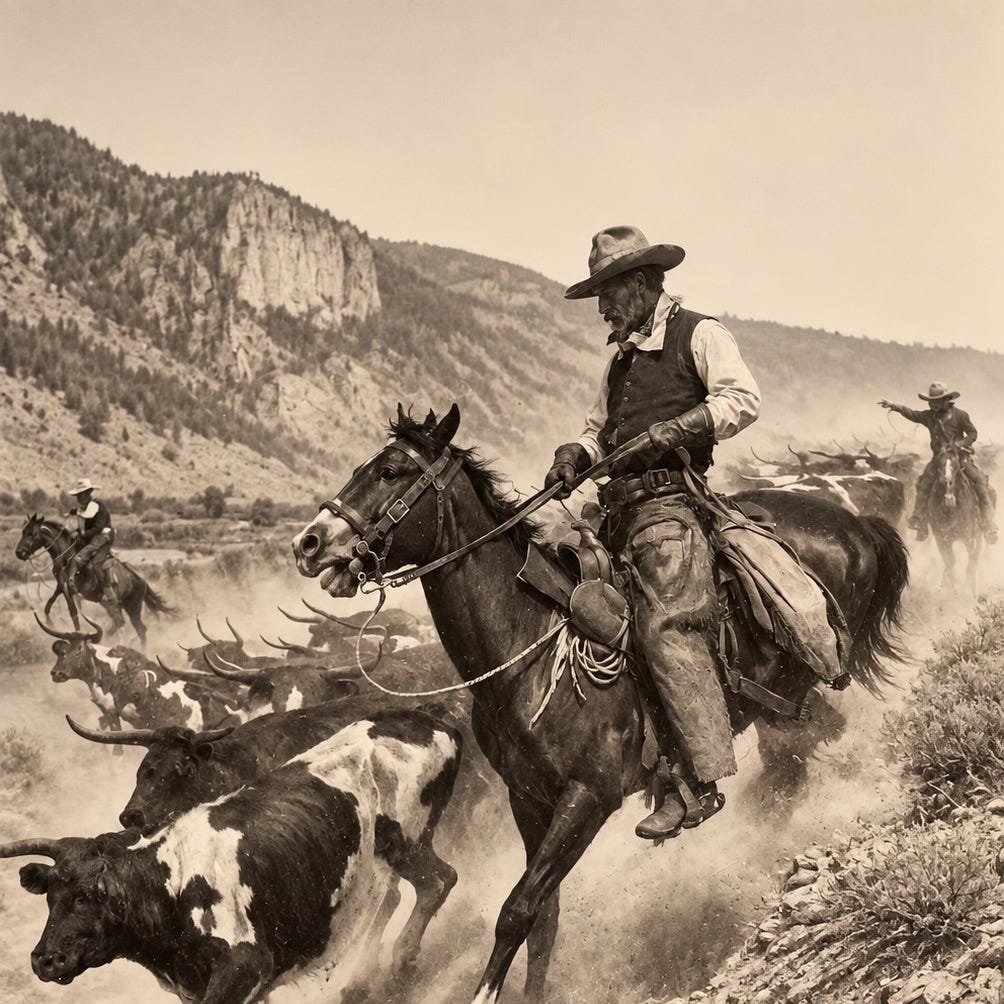
That’s an international list, but what I’m talking about is more true in America than anywhere else because grinding is the most American shit of all. The attitude that it’s foreign discards the deeply American notions of the self-made man, of true grit, of the Protestant work ethic, and of Horatio Alger stories that put effort above inborn gifts. It dismisses the American idea that you shoot your shot, give it your all, and bust your ass. Hell, even if you fail, you can rest your head easy at the end of the day knowing you did your best. In some parts of the world, if you put everything on the line and fail, you’re seen as a failure. You threw everything into a startup and it didn’t pan out? You’re a fool. But in America, you’re seen as a risk-taker, a badass, someone who doesn’t back down, who says things with their chest, who rages against the storm, clinging to the mast, screaming in the wind. Americans may be brash and loud and sometimes crude, but we are also the Lieutenant Dans and Cool Hand Lukes of the world. The frontiersman, the gunslinger, the dogface soldier. What we love about these figures is their unbreakable determination, their spine, and yes, their grinder mentality. You might be good with a lasso and maybe you can even ride a horse, but if you’re a stranger to striving and hard fucking work, you ain’t no cowboy, son.
Great article! Meritocrats do not surrender to an aristocracy of talent. Talent may be an awesome gift, and it can give you a superb start—but right behind you is a stream of talented competitors grinding to overtake you. And when they do, they’ve earned it. 😉
Love this. I love American grit and hard work. I'll take that over french fatalism any day.