

A snake entered the hollow innards
of a she-camel’s slaughtered carcass
but a thorn lay beneath the surface
and the coward refused to be shamed
while the brave one exposes his neck
and the horse gives up its noble worth
in exchange for beauty
limitless arrogance arrives
laughter becomes contempt
what was unfinished remains as it was.
— “The Killing of the She-Camel” by Maxamed Ibraahin Warsame, aka “Hadraawi”
There’s a dark American alchemy that turns obscure nationalities into demonic forces overnight. Last year, that burden fell on Haitians living in Springfield, Ohio, who suddenly found themselves accused of eating their neighbors’ pets. On September 9, the attention whore Laura Loomer posted on X, “The Biden-Harris regime imported over 20,000 cannibalistic Haitians who are now killing people’s pets.” Within hours, then-Senator JD Vance wrote, “People have had their pets abducted and eaten by people who shouldn’t be in this country.” Later that day, Senator Ted Cruz shared a meme that said, “Please vote for Trump so Haitian immigrants don’t eat us.” The next day, during his debate with then-Vice President Kamala Harris, Donald Trump said, “In Springfield, they’re eating the dogs, the people that came in, they’re eating the cats.” None of these claims—none—were supported by police reports, animal shelters, or any fact-checking outlets. But as a result, Haitian immigrant mothers and their children faced racist intimidation and even bomb threats. One Haitian American said, “They hate us. I take my kids to the park usually. I cannot do that anymore. You know, I have to just stay home and just don’t go out. We used to just go for a walk in the neighborhood, but we cannot do that anymore.”
Instead of soul searching and penitent reflection, we got a catchy phonk remix of Trump’s comment with animated dancing cats. I grew up in the Bahamas, where Haitians are the largest immigrant community. My mother worked in real estate and hired Haitians often, so I got to know them better than most Bahamians. My family also had a place on Abaco Island, and more than once, I visited the Haitian shantytown known as the Mudd, which Hurricane Dorian demolished in 2019. In my estimation, Haitians are an industrious, devoutly Christian, and warmly communal people. Yes, criminal gangs run Port-au-Prince, but this doesn’t mean Haitians are not a law-abiding people. On the contrary, they are deeply rule-oriented, though the rules they value most are tied to Christian faith, community honor, and the authority of elders. One day, while visiting my aunt in Lyford Cay—one of the wealthiest, most exclusive neighborhoods in the world—I decided to walk to into town. But Nassau was 12 miles away and I don’t think I made it more than four before I grabbed the No. 12 jitney (bus) instead. The driver nodded and said, Mahnin, bossman.
Morning, I replied, paid the $1.50 fare, and took the only free seat. After a few minutes, I struck up a conversation with the older man beside me. His name was Jean-Louis, he looked about 70, and his hands were rougher than chewed-up boot leather. He’d been out on a painting job for some wealthy family and was headed back to Carmichael Road, where there’s a major Haitian community. His skin was black as coal, and his accent was almost incomprehensibly thick. Me ah go Kaa-mike-el Woad, oké? He’d barely told me his name when he began sharing his love of God. Me, ah kretyen, wi. Every day, me priye. Me love Jesus, anpil anpil. He eagerly wanted to know if I was Christian too. There was a penetrating kindness in his eyes, as if he was looking at me with genuine love, the way a grandfather looks upon his grandson. He won me over instantly and we spent the ride sitting at the back, like two naughty schoolboys, laughing loudly. At one point, he told me about his wife and his son, back in rural Haiti. His bright, boyish eyes got dark. He paused. Tried to fake a smile. Your family sounds beautiful, I said. His smile returned, and soon we were laughing again. Mostly, though, he wanted to know about me. And he genuinely, deeply cared when I told him. To this day, when I think of Haiti and its people, I think of Jean-Louis.
This is the value of getting to know people individually rather than judging them as a group. The Haitian government has estimated there are 12,000 armed gang members in the country—out of a total of 12 million people. That means gang members in Haiti are one-third as common as identical twins in America. But to hear MAGA politicians tell it, you’d think every single person on the west end of Hispaniola was monozygotic. My own people faced a similar fate, and I’m not even talking about my Jewish or Russian ancestry. Bahamians in South Florida, especially Miami and Palm Beach County, were routinely blamed for disproportionately causing crime during the War on Drugs. Many Bahamians came to Florida for seasonal work in fishing, agriculture, or tourism. A tiny number became involved in maritime smuggling routes. But sensationalist “journalists” framed Bahamian boat workers as cocaine couriers, even though the vast majority were hard-working, law-abiding, legal residents or citizens. But we have made our way. Affluent Americans have flooded our beautiful beaches, and we have revolutionized American cinema and music. Nowadays, when I tell Americans I grew up there, they smile and think of a tropical paradise.
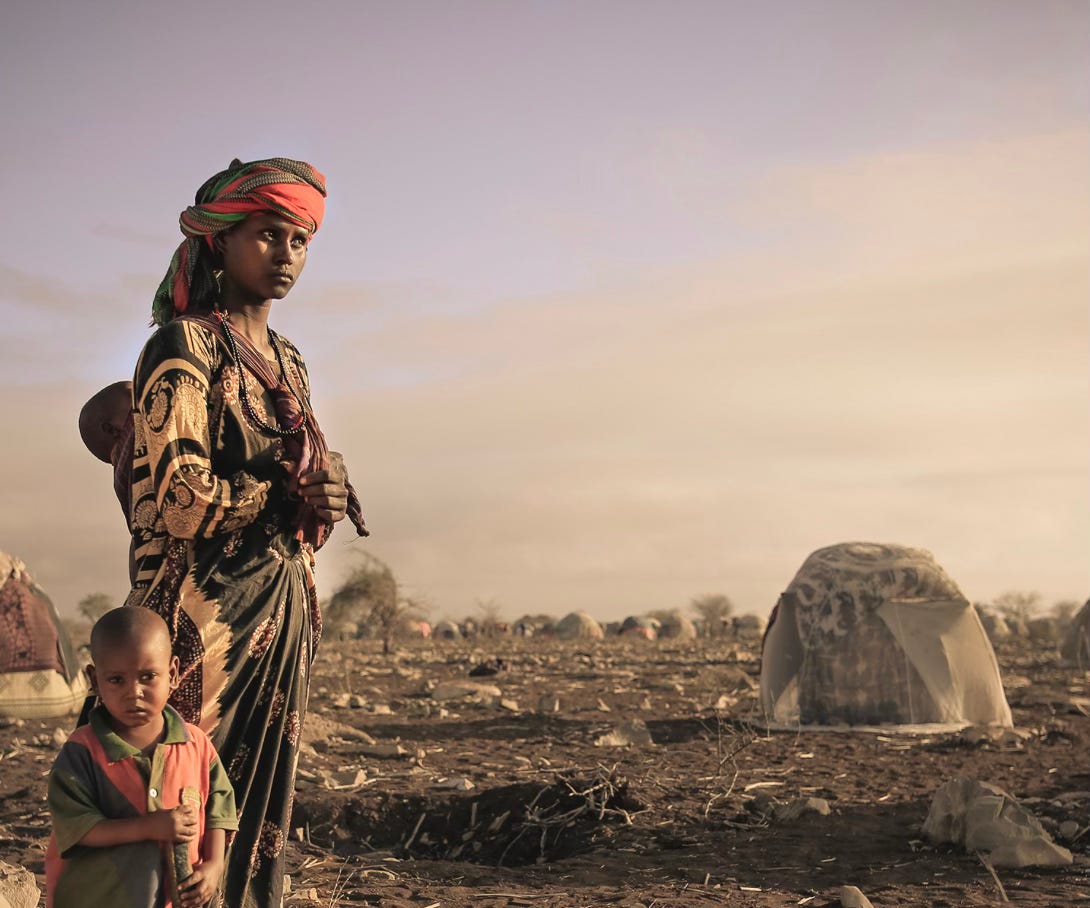
This year, the spotlight of political scrutiny and viral claims has swung to Somali communities in Minnesota and Columbus, Ohio, who find themselves cast as the newest avatars of everything wrong with immigration, despite the inconvenient fact that 91.5% of them are U.S. citizens. Somali migration to the United States represents what scholars call compressed modernity, a population moving in a single generation from rural, often pastoral, and in this case war-torn contexts into advanced service and knowledge economies. Think of it as a stress test for whether American institutions can actually handle rapid, refugee-driven demographic change. But at the same time, the question of Somali immigration confronts us with some ugly realities.
Death of a nation
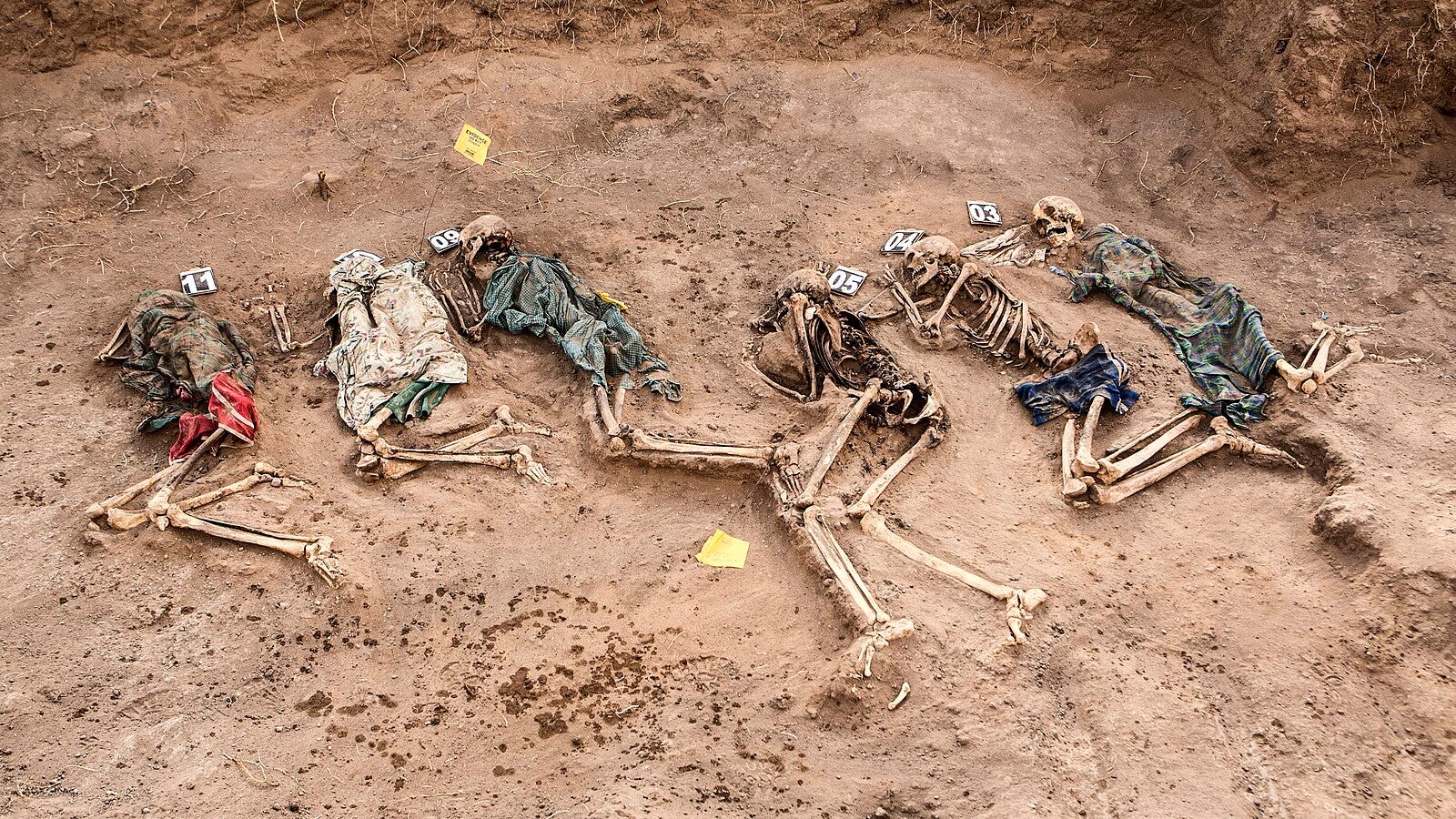
Somalia is not just a failed state. It’s the most failed state on Earth, topping the annual Fragile States Index for six consecutive years from 2008 through 2013. In fact, the term “failed state” itself was coined in the 1990s to describe Somalia’s civil war. How did things come to this? In 1969, General Siad Barre seized power and turned Somalia into a one-party Marxist-Leninist communist state. Under his horrific dictatorship, Somalia descended into a pattern of state violence so severe that it not only brutalized the population but ultimately destroyed the nation itself. Barre is without question one of the most evil dictators in human history. The horrors he carried out are too numerous to list here, but among them, a few stand out as the moral and political breaking points of the Somali state. There was the Isaaq genocide, also known as the Hargeisa Holocaust. The Isaaq people of northern Somalia were not so eager to live under a communist dictatorship. In response to their insurgency, the Barre regime rounded up and executed innocent Isaaq people, women were raped as a weapon of war, and entire communities were erased. As many as 200,000 people were buried in mass graves. To put that in perspective, that is more than twice the number of Palestinians killed during the war in Gaza. Barre also ordered the Somali Air Force to bomb his own cities, especially Hargeisa and Burao, leveling neighborhoods, hospitals, markets, and schools. Meanwhile, he constructed a nationwide torture and surveillance state that would’ve made Stalin blush with pride. Political opponents, journalists, clan elders, even suspected critics were imprisoned without trial, beaten with rifle butts, whipped with electric cables, electrocuted by their ears and genitals, burned, crushed to death, and often simply disappeared. Barre slaughtered entire families for the alleged crimes of individuals, women and children included.
One refugee from the country is Ilhan Omar, the U.S. representative for Minnesota’s 5th congressional district since 2019, who loves to trash the very America that welcomed her family and saved their lives, and who recently said of Americans:
These people are just idiots. I really, I’m at the point where it’s become really hard to have an intellectual debate with any of these people because the level of stupidity that they are displaying every single day is frankly embarrassing. Not just in Congress, but as Americans.
But here’s the twist. Her family didn’t come as refugees from Barre’s evil regime. Her father, Nur Omar Mohamed, was a colonel under Barre. She was raised by her father and grandfather Abukar, who was the director of Somalia’s National Marine Transport, also under Barre. In other words, her family didn’t flee persecution in Somalia. They fled justice. And now Omar herself is a powerful political voice in America, where she pushes a socialist agenda. Just imagine if the Nazi minister of transport’s grandson, and the son of a Nazi colonel, fled justice in postwar Germany and came to America only to talk about how stupid Americans are for not embracing a more fascistic form of government.
In any event, Barre’s sadistic torture state eliminated any peaceful channels for reform, making armed rebellion the only remaining path. By the time he was overthrown in 1991, the violence he unleashed had already shattered the nation and ensured that the fall of his regime would not bring peace, but total state collapse and decades of sickening civil war. No functioning central government followed. Warlords and rival clans fought for territory while law, food systems, and public services vanished. The violence destroyed agriculture and trade. Combined with drought, this caused a devastating famine between 1991 and 1993, in which upwards of 300,000 people died. The “stupid” United States, along with the United Nations, intervened with food and peacekeepers, but the mission collapsed after the infamous Black Hawk Down incident in 1993. Eventually, out of the chaos and ruin emerged al-Shabaab, an al-Qaeda–linked terrorist group that now controls rural territory, bombs cities, forces children into combat, executes dissenters, and blocks humanitarian aid. Making matters worse, repeated mega-droughts through the 2010s and 2020s have caused crop failures and livestock deaths. By the 2020s, over 5 million Somalis were internally displaced and over 1 million were living as refugees outside the country.
Bad facts
Between 2012 and 2022, the United States resettled about 46,796 refugees from Somalia, making Somalis the fifth-largest refugee-origin group in that decade—after refugees from Myanmar, Iraq, the Democratic Republic of the Congo, and Bhutan. But the Somali diaspora in America is not particularly large. The 2023 American Community Survey estimates there were about 169,799 people with Somali ancestry in the United States, plus or minus 20,798, including roughly 92,400 who were actually born in Somalia. But that number rose to 259,000 by 2024, with 108,000 in Minnesota alone. An increase of more than 50% in a single year is alarming. But let’s also keep in mind, we’re talking about a total population smaller than the number of Americans who own ferrets. And again, only 8.5% are non-citizens. But almost half of them are under the age of 18, and the median household income for Somalis in Minnesota sits at $43,600, which is roughly half the state median. The educational statistics bear out the challenge of compressed modernity. For Somali Minnesotans age 25 and older, over 40% have less than a high school education, while only about 16% have a bachelor’s degree or higher, compared to roughly 39% of Minnesotans overall. Be warned, if you dump a ton of poor, war-torn young men in a region of Scandinavian-derived prosperity without a lot of paths to success, this is a recipe for frustration that often leads to resentment and high crime rates.
Somali communities have strong internal networks, high levels of entrepreneurship, but relatively weak access to formal financial institutions, homeownership, and elite credentials. This can make them look like a “burden” in certain datasets, even as they play substantial roles in local economies. For instance, Somalis have built dense commercial districts in places like Minneapolis’ Cedar-Riverside, also known as “Little Mogadishu,” as well as Columbus’ Northland area, and parts of Seattle. By the mid-2000s, researchers estimated there were about 600 Somali-owned businesses in Minnesota alone, up from essentially zero one decade before. At the same time, much of this economic activity flows through informal channels. Research on Somali entrepreneurs describes heavy reliance on informal savings circles known as hagbad to finance businesses. A household that saves and invests informally may look “poor” in U.S. data if little passes through taxable or reported accounts, and they may struggle to qualify for mortgages or business expansion loans, but that is often misleading. It’s also, however, a major problem because keeping money off the books allows for criminal behavior.
Over the past several years, a series of large-scale public-benefit fraud cases in Minnesota—especially Minneapolis—has drawn national attention because many of the defendants are Somali-American. The most famous of these cases involves a nonprofit called Feeding Our Future, which federal prosecutors say orchestrated one of the largest pandemic-relief fraud schemes in U.S. history. During the COVID-19 pandemic, the federal government rapidly expanded emergency food programs for low-income children who had lost access to school meals. Feeding Our Future was authorized to oversee meal distribution through small local food vendors. Prosecutors claim the organization and its partners submitted massively inflated claims, falsified meal counts, and created fake invoices for food that was never served. According to federal indictments, dozens of shell companies were created as “meal sites,” many reporting impossibly high numbers—sometimes thousands of meals per day per location with no physical capacity to deliver them. As a result, the group reportedly stole hundreds of millions of dollars in federal funds. Dozens of defendants have been indicted, and multiple guilty pleas have already been entered for wire fraud, money laundering, and conspiracy. These sick freaks spent the money—meant for starving children—on luxury homes and high-end vehicles. There are even claims that stolen funds were being routed to al-Shabaab, the Islamist terrorist group and al-Qaeda ally.
In addition, Minnesota has prosecuted Somali-Americans in Medicaid fraud, autism-services fraud, housing assistance abuse, and childcare billing schemes. It’s difficult to put into words how common fraud and scamming is in Somali culture. Ilhan Omar has been repeatedly accused of committing fraud herself, by marrying her own brother to help get him into the country. Naturally, if we find that certain Somali individuals are committing fraud, it does not follow that Somalis as a group are unusually fraudulent. That said, none of these scandals should be surprising, given that Somalia is the most corrupt nation in the entire world, second only to South Sudan. It may be a difficult pill for some people to swallow, but not all cultures are created equal. Some cultures are more corrupt. Some are primitive and vile. Yet at the same time, its people may be victimized in ways that should make us want to help them if we can. Not all Germans were evil. Not all white Southerners supported slavery. We must stress, each and every time, that we are not talking about all members of a group. Unless it is, actually, all members. Not all Somalis are dishonest. Not all Palestinians are antisemitic. But the way we solve for this is by anchoring our perception to statistical truths, and this can lead to uncomfortable places, such as when we know for a fact that the overwhelming majority of a population supports, or practices, some heinous act that would normally cause us to label any person doing such a thing as evil. Because when that’s the case, the generalization is not fallacious, but statistically supported—and justified.
Again, we must stamp out any trace of unfair generalization. That way leads to all sorts of hateful thinking, such as racism. But it is nevertheless true that Somalia is the second-most corrupt place in the world, and having imported a couple hundred thousand Somalis, we shouldn’t be clutching our pearls when we read that Somalis have scammed the U.S. taxpayer, and needy children, out of hundreds of millions of dollars. If it were Japanese, I’d be shocked. Venezuelans, less so. And when it comes to Somalis, corruption isn’t the only statistic worth chewing on. There’s also the fact that over 40% of married Somali women were wed as minors—almost one-quarter before they were 15. The simple fact is, men marrying children is common practice in Somali culture, and yes, they consummate them—around 65% of first childbirths occur among women ages 15-24. Some, much younger still. Do with this information what you will, but it does suggest that a staggering number of Somali men are pedophiles.
Here’s another fact. Over 99% of Somali women aged 15-49 have undergone Type III female genital mutilation. This type, also known as infibulation, is the most severe kind of female genital mutilation in existence. It involves using unsterilized razor blades or broken glass to slice off the labia minora, labia majora, and sometimes also the clitoris, then sewing the vagina shut while leaving a small opening for the passage of urine and menstrual blood. This leads to lifelong and excruciating pain, chronic urinary and menstrual problems, agonizing sexual intercourse, childbirth complications, depression, PTSD, and more. In case you are wondering, they cut them open to let them give birth and sew them back up after. And the practice has absolutely zero health benefits, despite what Somali men may claim. Let me repeat, over 99%. What portion of Somali men do you suppose fully supports this practice, given that more than 99% of women aged 15-49 have had it done? I mean support it enough to approve it being done to his own mother, his own wife, his own daughter. Of course, some progressives will mount defenses for these men based on cultural norms, ignorance, or what have you. I am not going to counter-argue any of that here. But if you happen to be someone who thinks anyone who supports this being done to his own wife or daughter is evil, that puts you in a place of extreme moral tension with regard to most Somali men, if not virtually all of them.
I am not making any arguments about what you ought to think on the matter, but I will say two things. First, it is grossly immoral to turn on anyone pointing these facts out and call them racist rather than directing one’s attention to the female victims. Second, there are at least half a dozen other statistics, just as dark, that I could point to with regard to Somali culture. And so, while individual Somalis should be judged individually, it is not unfair for any nation to ask itself how much of this they want to import. Many Europeans countries have refused to even consider the question for fear of seeming bigoted, and the results of this are becoming plainer every day.
Enter Trump
The Somali immigration story has been simmering for a while, but it blew up again last week thanks to President Trump. While speaking in the Oval Office last Wednesday, a reporter told Trump, “The mayor of Minneapolis, Jacob Frey, he’s saying that he’s actually proud to have the largest Somali community in the country, and his police chief—”
Trump cut her off:
Well then he’s a fool. I wouldn’t be proud to have the largest Somalian—look at their nation. Look how bad their nation, it’s not even a nation. It’s just, people walking around killing each other. Look, these Somalians have taken billions of dollars out of our country. They’ve taken billions and billions of dollars. They have a representative, Ilhan Omar, who they say married her brother. It’s a fraud. She tries to deny it now, but you can’t really deny it because it just happened. She shouldn’t be allowed to be a congresswoman. And I’m sure people are looking at that. And she should be thrown the hell out of our country. And most of those people, they have destroyed Minnesota, okay? Minnesota, you have an incompetent governor, you have a crooked governor, he’s crooked as hell, but he’s incompetent. Walz is, he should be ashamed. That beautiful land, that beautiful state. It’s a hellhole right now, and the Somalians should be out of here. They’ve destroyed our country, and all they do is complain, complain, complain. You have her. She’s always talking about “the Constitution provides me with…,” uh, go back to your own country, figure out your own constitution. All she does is complain about this country, and without this country, she would not be in very good shape. She probably wouldn’t be alive right now. So, Somalia is considered by many to be the worst country on Earth. I don’t know. I’ve never, I haven’t been there. I won’t be there anytime soon. I hope. But, what Somalia and what the Somalian people have done to Minnesota, is not even believable. It’s not even believable. And a lot of it starts with the governor. And a lot of it starts with Barack Hussein Obama, because that’s when people started coming in, and you have to have people come in that are gonna love our country, cherish our country. They want to kiss our country good night. They talk about our country. We want them to pray for our country. This is not the people living in Minnesota, and she’s a disaster. She should not be, and her friends shouldn’t be allowed, frankly, they shouldn’t even be allowed to be congresspeople, okay? They shouldn’t even be allowed to be congresspeople because they don’t represent the interests of our country.
Much of this is hyperbolic, as is customary with Trump, but some of it is fair. Yes, Somalia is in certain regards arguably “the worst country on Earth.” Somalis have allegedly taken hundreds of millions, if not up to $1 billion, though I am not aware of any evidence to suggest it was “billions and billions.” That sounds more like Trump being Trump. Nor is Minnesota currently a “hellhole.” Quite the opposite. It ranks among the top five U.S. states for quality of life, and top 10 for education, and No. 1 for health care. Also, no, Obama is not responsible for when large numbers of Somali immigrants entered the United States. Somali refugees began arriving in Minnesota in the early 1990s, following the 1991 collapse of the Somali government—nearly two decades before Obama took office. And no, immigrants should not only be allowed in if they love our country. You can come here, hate America, and want to make it better. You can come here, hate America, not want to make it better, but still contribute to our economy. If the guy who serves me a pita wrap thinks America is the Great Satan, so what. Allah yahdik, buddy. I know white Christian citizens who would agree. But I don’t want people to have to take a loyalty test to step inside. That flies in the face of exactly what makes this country great—though, yes, to become a citizen you do have to take one. This also means that our very liberalism is, in some contexts, a vulnerability. Yes, being principled does come at a certain cost. Some people, Curtis Yarvin definitely being one, think we should therefore abandon our principles. I disagree. But Trump is great at one thing: identifying a real problem that has been long ignored, or even worsened, by failed leadership on the left. What he is often less great at is offering reasonable policy solutions.
This is America
I do not believe in whitewashing ugly facts to avoid the risk of racist morons weaponizing them. America is long past needing to have a frank and open discussion about immigration, about the fact that not all cultures are equally good, and that we may want to be selective about which populations we welcome with open arms, and which ones we look at more critically. We must not be frightened off the topic by woke midwits twitching to call anyone racist. And yeah, there are a lot of bad facts about Somali people that we need to confront if we’re going to welcome them into our nation. But despite the grim statistics shared above, Somalia’s catastrophe did not arise from the inherent character of its people. Rather, in my view, it came from practicing a morally polluted faith and the system of communist rule, along with the designs of a dictator whose brutality hollowed out a functioning society and scattered millions to the wind.
America is great because we are strong enough to hold out a hand in the storm and welcome people like this onto our raft. The United States—out of humanitarian duty, geopolitical calculation, and base moral instinct—absorbed hundreds of thousands of these people, at some cost to our society. What followed was never going to be neat. Compressed modernity strains both the institutions that receive refugees and the communities built by those refugees as they try to translate clan-based, informal, survival-oriented social structures into the rules-driven world of a wealthy democracy. Let’s be brutally frank, this is a civilizing mission. Somalis come from a land of savages, if ever there was one. Many presumably arrive here as such, particularly the men, I imagine. But we must not turn immigrant groups into existential villains. This is a political reflex that recurs across American history—from the Irish and Italians to Cubans, Vietnamese, Hmong, Jews, Haitians, Bahamians, and now Somalis.
If American democracy is to remain confident rather than brittle, it must be capable of holding two ideas at once. One, that individuals and networks should be held accountable for crimes while gross cultural practices must be openly rejected. Two, that entire communities should not be cast as civilizational threats because of those crimes or practices. Somalia’s story is one of national disintegration. The American story need not echo this. The real test is not whether the United States can absorb people from failed states, or whose cultural practices we find repulsive, but whether it can do so without adopting the same zero-sum, clan-driven thinking that doomed those states in the first place.
A very well written and imminently reasonable article. The one quibble I have is the belief that we can import people who believe our country is “the great Satan” without issue. While it is true that some Christians also hold that view (hell, some non religious people hold that view for political reasons alone), once someone is a citizen there’s almost nothing that can be done. We have the ability to control who comes to this country, and barring individuals who hate our values is not some moral evil. I would prefer to have more people in the country who love America than hate her, call me crazy.
Quite a bit of subversion of expectations here, as the Haitian introduction led me to expect nothing but defense of Somalia. Three more points:
1. Talk of a high percentage of Somalis in the US being US citizens really doesn't impact criticism. We understand that entry into America and even citizenship have been doled out irresponsibly by past regimes, and legal approval has not solved the inherent problems.
2. Sympathy for Somalis doesn't mean that they are remotely close to being able to exist in our society, which is designed for far higher social trust than they have back home. They're generations deep in an "abuse or be abused" culture.
3. Any left-wing whining about how cultural criticism is "racist" should be silenced with a single word: REDNECKS. Rednecks are clearly meant to refer only to a certain ethnicity, and there is no limit to the over-the-top negative portrayals of rednecks that left-wing media gorges itself upon. They don't believe that stigmatizing an ethnic culture is wrong; they just hate "whiteness".